
Understanding Optimal Plank Duration for Core Endurance and Technique

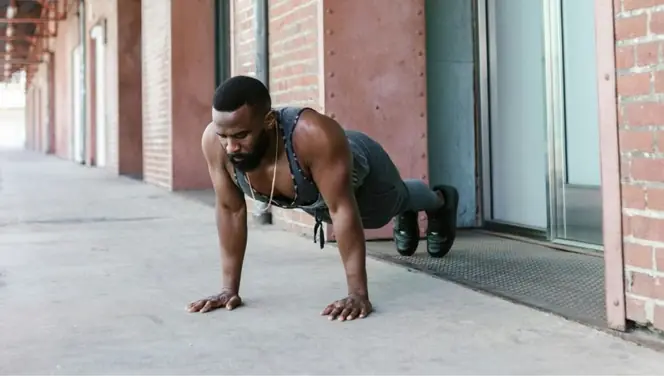
# How Long Should You Be Able to Hold a Plank?
The plank is a highly recognised exercise in fitness. It’s popular because it doesn't need any equipment and can be done nearly anywhere. This movement works multiple muscle groups at once. However, many people still wonder about the optimal time to hold a plank.
The answer isn’t simply about holding it for as long as possible. While social media often showcases extreme plank challenges lasting five to thirty minutes, fitness experts agree that the quality of the plank is more important than the duration.
A well-executed plank enhances core stamina, increases trunk stability, and improves movement efficiency for both sports and daily tasks. Holding a poor position for long periods can do more harm than good and may lead to reinforcing bad habits.
### What Does the Plank Actually Train?
Though many see the plank as an abdominal workout, it's a full-body exercise. In a standard forearm plank, several muscles work together to keep the body stable. These include the rectus abdominis, transverse abdominis, obliques, erector spinae, gluteus maximus, shoulders, and chest. Instead of creating motion, these muscles help protect the spine.
The core is often viewed as a muscular cylinder that moves force between the upper and lower body. Strong core stability allows athletes to perform better in activities like sprinting or lifting while also keeping unwanted movement in check. Studies on muscle activity show that planking activates important core muscles while placing less strain on the lower back than many traditional abdominal exercises.
### Why Core Endurance Matters More Than Core Strength
While many believe the plank measures strength, its primary focus is on muscular endurance. Core endurance is the ability of trunk muscles to maintain stability over time without tiring. This is crucial because most sports and regular activities require continuous spinal stability instead of just maximum force for a short time.
Research by Stuart McGill indicates that trunk endurance is more important for spinal health than just high strength. This explains why many coaches include planks in injury prevention programs instead of using them to just build visible abdominal muscles.
### How Long Should You Be Able to Hold a Plank?
Though there isn’t a single standard for plank performance, several expert recommendations provide helpful benchmarks. For generally fit adults, holding a proper forearm plank for between 30 and 60 seconds is ideal for demonstrating sufficient core endurance.
Once someone can maintain good form for 60 to 90 seconds, many strength coaches suggest increasing difficulty rather than extending hold time. Advanced recreational athletes might hold high-quality planks for 90 to 120 seconds. Elite athletes can often exceed two minutes, but they rarely focus on maximum hold times; they prefer to challenge themselves with various plank types.
Stuart McGill advises that holding a standard plank for several minutes offers limited benefits. Instead, shorter, high-quality holds with good posture often provide better results.
### Why Longer Is Not Always Better
While it may seem that longer plank times indicate stronger core strength, studies suggest this isn't necessarily true. As muscles tire, posture tends to decline. When this happens, the plank no longer challenges the targeted muscles effectively. Longer holds can also result in diminishing returns; after a certain point, additional time may only increase discomfort without improving strength.
Strength training relies on progressive overload. Rather than just extending hold durations, many athletes increase difficulty with added resistance, instability, or movement variations. For instance, a 45-second plank with one leg raised can be more beneficial than holding a standard plank for three minutes.
### Proper Plank Technique
Technique is crucial for ensuring the exercise effectively targets the right muscles. Start with forearms below your shoulders, elbows bent at about 90 degrees. Extend your legs behind you and balance on your toes. Your body should form a straight line from head to heels. Keep hips from rising too high or sagging. Brace the abdominal muscles as though getting ready to absorb impact, and squeeze your glutes. Keep breathing normally throughout the hold. The neck should be neutral, with eyes looking slightly down rather than ahead.
### Common Mistakes That Shorten Your Plank
Poor positioning can significantly reduce the plank’s effectiveness. Dropping the hips places extra stress on the lower back and decreases abdominal activation. Lifting the hips too high shifts effort from the core to the shoulders. Holding your breath can increase unnecessary tension and raise blood pressure, especially during longer holds. Looking forward instead of maintaining a neutral neck can also lead to neck discomfort.
It's better to stop when your form begins to fail than to keep holding on with bad technique.
### Does a Better Plank Mean Better Athletic Performance?
Core training enhances athletic performance, but it’s not just about planking longer. The core helps transfer force between the upper and lower body. Effective force transfer allows athletes to sprint faster and lift heavier weights among other benefits.
Several studies have found that structured core training improves balance, running efficiency, jumping, and overall movement effectiveness, particularly for developing athletes. However, the plank should be part of a well-rounded core training routine rather than the only focus.
Dynamic exercises that challenge rotation, anti-rotation, lateral stability, and hip control are also important for athletic development. For athletes in CrossFit, weightlifting, or field sports, planks should complement other strength exercises rather than replace them.
### Can Planks Help Prevent Back Pain?
With low back pain as a leading cause of disability, researchers have studied whether core exercises can help. Evidence suggests that correctly prescribed core stability exercises can alleviate pain and improve function in individuals with chronic low back pain.
Planks are often included in rehabilitation routines as they build trunk endurance while limiting spinal movement. However, individuals with injuries should not assume that planks are appropriate; exercise choices need to be tailored to the person's condition and supervised by a professional.
### How Often Should You Train Planks?
Most healthy individuals can do planks safely two to four times each week. Since this exercise relies more on muscular endurance than heavy weight lifting, recovery needs are typically lower. Beginners might start with three sets of 20 to 30 seconds while maintaining excellent form. As endurance develops, progressing toward three sets of 45 to 60 seconds can be suitable before trying more difficult variations. Athletes often add planks to core circuits that include side planks and other stability exercises.
### The Bottom Line
The most effective plank is not necessarily the longest. For most healthy adults, holding a perfect plank for 30 to 60 seconds is good for core endurance. Recreational athletes may reach 60 to 90 seconds, while highly trained individuals can often go over two minutes.
Once reaching around two minutes with perfect form, extending time provides limited benefits. Instead, increasing challenge through weight or instability variations is more effective for improving strength and stability.
Quality trumps quantity. A perfectly executed one-minute plank usually brings more benefits than a five-minute hold performed with poor form.
### Key Takeaways
1. A proper plank works multiple muscle groups.
2. Core endurance is more essential than just strength.
3. Hold a plank for 30 to 60 seconds to demonstrate good endurance.
4. Focus on technique to maximize benefits.
5. Quality over quantity is crucial for effective training.
**References**
- Akuthota, V., et al. (2008) ‘Core stability exercise principles’, Current Sports Medicine Reports, 7(1), pp. 39 to 44.
- Behm, D.G., et al. (2010) ‘The use of instability to train the core musculature’, Applied Physiology, Nutrition, and Metabolism, 35(1), pp. 91 to 108.
- Ekstrom, R.A., et al. (2007) ‘Electromyographic analysis of core trunk, hip, and thigh muscles during nine rehabilitation exercises’, Journal of Orthopaedic and Sports Physical Therapy, 37(12), pp. 754 to 762.
- Granacher, U., et al. (2014) ‘Effects of core strength training using stable versus unstable surfaces on physical fitness in adolescents’, BMC Sports Science, Medicine and Rehabilitation, 6(40).
- Hibbs, A.E., et al. (2008) ‘Optimizing performance by improving core stability and core strength’, Sports Medicine, 38(12), pp. 995 to 1008.
- McGill, S.M. (2010) ‘Core training: Evidence translating to better performance and injury prevention’, Strength and Conditioning Journal, 32(3), pp. 33 to 46.
- McGill, S.M. (2016) Low Back Disorders: Evidence Based Prevention and Rehabilitation. 3rd edn. Champaign, IL: Human Kinetics.
- McGill, S.M., et al. (1999) ‘Endurance times for low back stabilization exercises: Clinical targets for testing and training from a normal database’, Archives of Physical Medicine and Rehabilitation, 80(8), pp. 941 to 944.
- Reed, C.A., et al. (2012) ‘The effects of isolated and integrated core stability training on athletic performance measures’, Sports Medicine, 42(8), pp. 697 to 706.
- Vera Garcia, F.J., et al. (2000) ‘Abdominal muscle response during curl ups on both stable and labile surfaces’, Physical Therapy, 80(6), pp. 564 to 569.