
Ancient Humans Kept Dog Breeds Resembling Modern Varieties, Research Shows

# Major Scientific Breakthrough Shows Ancient Humans Had Dogs Like Modern Breeds
Recent research has revealed that prehistoric humans may have kept dogs resembling two contemporary breeds, marking a significant discovery in the field of genetics. This finding indicates that as far back as 15,000 years ago, these early dogs coexisted with humans, providing insights into the development and domestication of these animals.
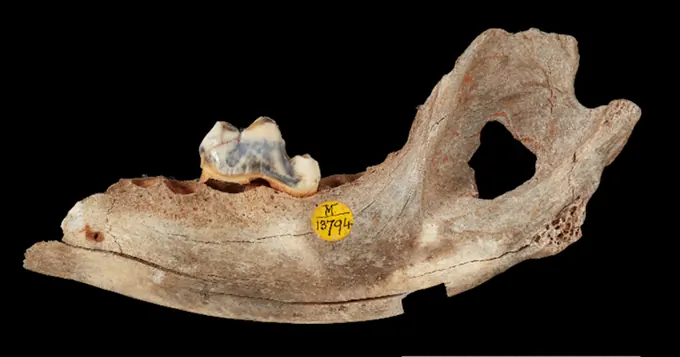
The study involved the genetic examination of ancient dogs discovered in Gough’s Cave in England and P?narba?? in Turkey. According to Marsh from the Natural History Museum, "The genetic identification of two Palaeolithic dogs from Gough's Cave and P?narba?? represents a step-change in our understanding of the earliest dogs. These specimens allowed us to identify additional ancient dogs from sites in Germany, Italy and Switzerland, which clearly show that dogs were already widely dispersed across Europe and Turkey by at least 14,000 years ago."
Researchers also revealed that by roughly 15,000 years ago, various canines existed across Eurasia, ranging from Somerset to Siberia. Dr. Lachie Scarsbrook from LMU Munich noted, "By 15,000 years ago, dogs with very different ancestries already existed across Eurasia. This raises the possibility that domestication occurred during the last Ice Age, more than 10,000 years before the appearance of any other domestic plants or animals."
Furthermore, the discovery underscores the importance of dogs to early human societies. Professor Laurent Frantz, also from LMU Munich, remarked, "The fact that people exchanged dogs so early means these animals must have been important. With limited resources, keeping them implies they served a purpose, and one possibility is that they acted as a highly efficient alarm system."
Despite the cultural and genetic diversity among early human populations across Europe and Turkey, dogs seemed to have been integral to their daily lives. Barnes from the Natural History Museum expressed, "It's amazing to think how these very different human groups might have worked with dogs as part of daily hunting and fishing activities." This finding adds a new layer to our understanding of the relationship between early humans and their canine companions.