
Competitive Fitness Is Nurturing Young Athletes Within Its Own Discipline Earlier Than Ever

# Is Competitive Fitness Growing Its Next Generation Sooner Than Before?
Competitive fitness has always excelled at recruiting athletes from various backgrounds.
A gymnast can appreciate body control in CrossFit, while a weightlifter brings valuable experience with barbells. Runners understand the significance of pacing in events like HYROX, and team athletes contribute their conditioning skills and competition mindset.
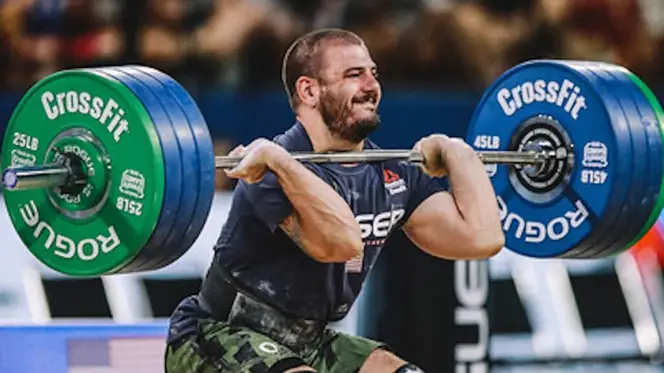
In earlier years, elite fitness competitions included many athletes from diverse sports backgrounds. For instance, Mat Fraser had already spent years in Olympic weightlifting before he ventured into CrossFit. Similarly, Tia-Clair Toomey’s journey included track and field, CrossFit, elite weightlifting, and participation in the Rio 2016 Olympics, along with winning a Commonwealth Games gold medal.
Their varied backgrounds helped them come into CrossFit with built-in strengths such as discipline and body awareness, giving them a clear advantage.
Today, access to functional training is much easier. Many competitions are more user-friendly, and local events no longer feel exclusive. CrossFit has introduced scaled divisions and a clear path for teens. HYROX has made fitness racing more approachable, with a straightforward format that involves running and completing stations. Online qualifiers, beginner categories, and community events have made competition more accessible than ever.
This newfound accessibility changes how young athletes perceive competitive fitness. While children have always stayed active and teenagers have competed, the environment surrounding them has evolved. Young athletes no longer need years in another sport before discovering functional fitness; they can now grow up immersed in it.
CrossFit had a youth programme before establishing an official teenage Games pathway. CrossFit Kids was introduced in the early 2000s, focusing on age-appropriate movement, confidence, and physical literacy, rather than competition. This approach allowed youth athletes to develop in a gym environment without the pressure of leaderboards.
The competitive structure developed over time, with teenage divisions introduced to the CrossFit Games from 2015 for participants aged 14 to 17. The Open allows those aged 14 and above to participate, enabling them to engage in scores, standards, and online competition while still in high school.
These teen divisions do more than create younger leaderboards; they reshape how young athletes view CrossFit. A 15-year-old can now see CrossFit as a standalone sport rather than a continuation of gymnastics, football, or track. It has its standards, events, role models, and a clear progression path. Athletes like Haley Adams and Emma Lawson have helped illustrate this transition, moving from teen competitions to the individual ranks.
HYROX is similarly targeting younger age groups with Youngstars, aimed at children and teenagers aged 8 to 15, featuring a scaled race format derived from the adult model. The concept is clear: run, complete stations, finish, and receive results. It focuses on fun while introducing basic performance culture and structure to young participants.
In the community, a frequent question arises: could some of these young athletes be the future of the Elite 15? HYROX doesn't need to assert it directly; the connection between youth formats and established elite tiers invites speculation.
This context is fascinating. If athletes grow up surrounded by functional movement and hybrid racing, they may reach adult categories with instincts that previous generations only developed later. They might understand transitions, pacing, mixed fatigue, and movement standards from an early age.
This could shift the competitive landscape. While the first generation of elite CrossFit athletes often had strengths from other sports, the next might excel due to specific functional fitness training over the years. They will have learned how to balance strength with conditioning, skill with composure, allowing them to handle the pressures of competition more effectively.
HYROX may witness similar developments. An adult who discovers the discipline at 30 may need time to learn event pacing and recovery between stations. Meanwhile, a teen who has engaged with the format from a young age will navigate these aspects instinctively.
Early exposure doesn’t automatically make better athletes, but it alters the foundation.
Moreover, this transition influences how young athletes perceive themselves. Improvement translates to enhanced movement, smarter pacing, and maintaining composure under pressure. At its best, competitive fitness can offer youngsters a positive relationship with effort.
The broader culture is taking note. A recent article in The New York Times highlighted young fitness influencers, signifying a growing conversation beyond just coaches and gym owners. Fitness performance is becoming visible and part of identity earlier in life.
However, this visibility invites caution. While feedback can aid improvement, it can also burden young athletes with pressure regarding every result.
Mal O’Brien is a noteworthy example. She was one of CrossFit’s promising young talents, winning a worldwide Open and finishing on the Games podium, before stepping back to focus on mental health. Her journey serves as a reminder that early success doesn't negate the necessity for space, perspective, and balance in life.
This highlights the importance of adult involvement in the sport. Young athletes are not simply miniature elite competitors. They require coaches who understand development, recovery, academics, and motivation. Parents should support competition without imposing excessive pressure. Organisers must ensure that youth formats build confidence before they add pressure.
Despite this, the trend toward early engagement in competitive fitness is clear. The sport has matured enough to nurture athletes from the start rather than importing them from other disciplines. The emerging generation may possess improved movement skills, pacing strategies, and an understanding of mixed-modal competition.
The challenge lies in allowing these young athletes to grow without rushing their development. Competitive fitness is fostering its next generation more rapidly than before, but age is merely part of the narrative. The more significant shift is that young athletes are entering a world that is structured, visible, and measurable, often not discovering it late through other sports. Increasingly, they are experiencing it as the sport itself.
The focus shouldn't be on creating the youngest competitors. Instead, the aim should be to cultivate athletes who aspire to continue training and competing when they are ready to make that choice for themselves.