
Recommended Dead Hang Times for Strength and Endurance Based on Fitness Level

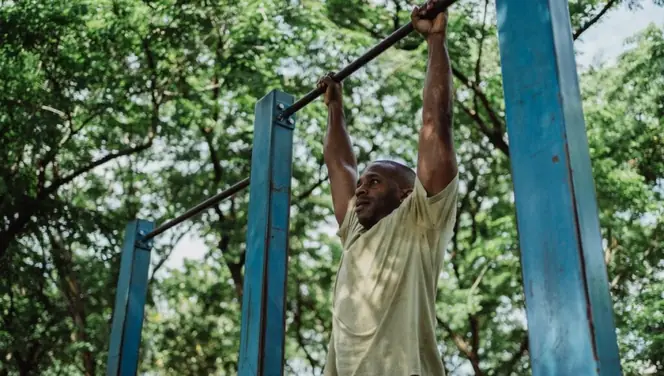
# How Long Should You Be Able to Dead Hang For?
The dead hang seems simple: gripping a pull-up bar and hanging until your grip fails. Although it doesn't require complicated movements or heavy equipment, this exercise can provide valuable insight into your strength, endurance, shoulder health, and overall fitness.
## Understanding Grip Strength
Grip strength is an important aspect studied in health and sports science. Research shows that stronger grips often link to better athletic performance, healthier ageing, and reduced risks of chronic disease and early death. While most studies focus on grip strength measured with a hand dynamometer, the muscle groups involved overlap significantly.
For athletes, a solid dead hang develops key strengths in gymnastics, CrossFit, climbing, obstacle racing, and calisthenics. If grip strength fails before the muscles or lungs do, performance can suffer.
## How Long Should You Be Able to Dead Hang?
Determining how long you should be able to dead hang depends on factors such as age, body weight, training history, and personal goals. Nonetheless, scientific standards offer helpful benchmarks for assessing your current abilities.
**Beginner:** Holding on for 10 to 20 seconds indicates a basic foundation. Many sedentary adults find it challenging to reach even 10 seconds. If your hang time is under 10 seconds, consider focusing on improving grip strength.
**Average:** A hang of 30 to 45 seconds shows good grip endurance for healthy adults who exercise regularly. This level is adequate for most recreational activities and sets you up for progress towards pull-ups.
**Good:** Aiming for a 60-second hang is a great target for many. Achieving this requires strong forearm endurance, stable shoulders, and effective body control. Strength coaches often view one minute as a significant milestone, indicating that grip strength likely won't impede basic pulling exercises.
**Excellent:** If you can hang for 90 seconds or more, you're well above average. This ability is common among experienced climbers, gymnasts, CrossFit athletes, and advanced calisthenics practitioners.
**Elite:** Elite athletes can maintain dead hangs for several minutes in controlled settings. Their success stems from specific endurance training, low body fat, efficient technique, and years of experience.
## Factors Influencing Dead Hang Time
Several aspects can affect how long you hang.
- **Body Weight:** Heavier individuals must support greater mass. Typically, increases in body weight without proportional grip strength lead to reduced hang times.
- **Grip Type:** An overhand grip is standard for testing. A mixed grip may allow longer hangs, while an underhand grip can feel easier for some.
- **Bar Thickness:** Thicker bars increase grip demands. Research indicates that larger handles require more activation of the necessary muscles.
- **Chalk:** Gym chalk improves grip by enhancing friction with the bar, making it easier to maintain a solid hold.
- **Training Background:** Athletes like climbers often outperform weightlifters in dead hangs due to sport-specific grip endurance training over the years.
## Goals for Dead Hang
When setting targets, your objectives should guide your focus.
- For general health, aiming for 30 to 60 seconds is beneficial.
- In strength training, consistently reaching 60 to 90 seconds indicates enough grip endurance for heavy pulling movements.
- For CrossFit and obstacle racing, exceeding 90 seconds is advantageous, helping to prevent grip fatigue.
## Benefits of Dead Hangs
Dead hangs can improve pull-up performance as grip failure is a common hindrance for beginners. Training to increase dead hang endurance supports the forearm flexors and encourages stability in the shoulders and core.
When performed correctly, dead hangs may also enhance shoulder mobility, offering gentle traction and requiring the stabilising muscles to engage. However, anyone with shoulder injuries or conditions should seek professional advice first.
## Improving Your Dead Hang Time
You can enhance your dead hang through regular practice. Start by hanging comfortably for two to three sessions each week, increasing the total time gradually. It's crucial to allow recovery, as grip muscles can fatigue quickly.
**Key Practices:**
- Engage shoulder muscles without completely relaxing them.
- Avoid excessive gripping strength early on to conserve energy.
- Be cautious about comparing times across different equipment due to variations in texture, diameter, and usage of chalk.
## Conclusion
For most healthy adults, achieving a one-minute dead hang serves as a worthwhile goal, reflecting grip endurance and shoulder stability. If you struggle to reach 20 seconds currently, steady practice can yield quick improvements in the initial months. Focus on building a level of grip endurance that aligns with your activity needs and supports your overall training objectives.
### References
- Bohannon, R.W. (2019) “Grip strength: An indispensable biomarker for older adults”, Clinical Interventions in Aging, 14, pp. 1681–1691.
- Chu, D.A. and Myer, G.D. (2013) Plyometrics. Champaign, IL: Human Kinetics.
- Cronin, J., Lawton, T., Harris, N., Kilding, A. and McMaster, D.T. (2017) “A brief review of handgrip strength and sport performance”, Journal of Strength and Conditioning Research, 31(11), pp. 3187–3217.
- Grant, S., Hynes, V., Whittaker, A. and Aitchison, T. (1996) “Anthropometric, strength, endurance and flexibility characteristics of elite and recreational climbers”, Journal of Sports Sciences, 14(4), pp. 301–309.
- Leong, D.P. et al. (2015) “Prognostic value of grip strength: Findings from the Prospective Urban Rural Epidemiology study”, The Lancet, 386(9990), pp. 266–273.
- MacLeod, D. et al. (2007) “Physiological determinants of climbing specific finger endurance and sport rock climbing performance”, Journal of Sports Sciences, 25(12), pp. 1433–1443.
- Ortega, F.B. et al. (2012) “Muscular strength in male adolescents and premature death: Cohort study of one million participants”, BMJ, 345, e7279.
- Teyhen, D.S. et al. (2014) “What risk factors are associated with musculoskeletal injury in US Army Rangers?”, BMJ Open, 4(7), e005599.
- Watanabe, K. et al. (2011) “Differences in parameters of the grip force distribution between expert and novice rock climbers”, European Journal of Applied Physiology, 111(8), pp. 1835–1840.